
Ask any seasoned property dealer in Islamabad or Rawalpindi what truly determines the fate of a plot, and the answer rarely mentions the plot itself. It mentions where the plot sits. Two parcels of identical size, purchased in the same week for the same price, can drift apart in value by staggering margins over a decade, and almost always the reason comes down to a single word that buyers underestimate again and again: location.
This piece is written for the buyer who is tempted by a low headline price or a persuasive sales pitch and needs a clear framework for judging whether a piece of land is actually worth owning. Rather than chasing hype, we will break down the specific locational factors that quietly compound over time and separate a plot that merely holds its value from one that genuinely builds wealth.
Location Is The Only Feature You Cannot Change
You can level a plot, build on it, landscape it, or resell it, but you can never pick it up and move it somewhere better. Every other attribute of a property is negotiable or improvable; its position on the map is fixed forever. That permanence is precisely why experienced investors obsess over it. A brilliant house in a poor location will always be capped by its surroundings, while an ordinary plot in a great location keeps climbing regardless of what stands on it.
When you begin evaluating options, resist the urge to fall in love with dimensions or price alone. Study the Silver city location and comparable positions with the same seriousness a business would apply before opening a flagship store, because in real terms that is what you are doing. You are placing capital on a fixed point and asking it to grow.
Road Access And Connectivity
The first practical test of any location is how easily people can reach it. A plot connected to a wide, maintained approach road and sitting within reasonable distance of a major expressway or interchange will always outperform an equivalent parcel stranded behind narrow, congested lanes. Connectivity shrinks the psychological distance between a location and the rest of the city, and buyers pay a premium for that convenience.
Think beyond today’s roads to the routes that are planned or under construction. The twin cities are constantly extending their network, and a plot that feels remote now may sit beside a busy corridor in a few years. The trick is to distinguish credible, sanctioned road plans from speculative promises, because only the former reliably lift land value.
Neighbourhood Character And Future Growth
A location is not just coordinates; it is a community with a trajectory. Look at who is already living nearby, what is being built, and how the surrounding blocks are filling out. A neighbourhood attracting families, schools, mosques, and daily-need shops is on an upward path, and land within it benefits from that momentum. A quiet, half-empty pocket may still be a fine long-term bet, but you should understand which stage you are buying into.
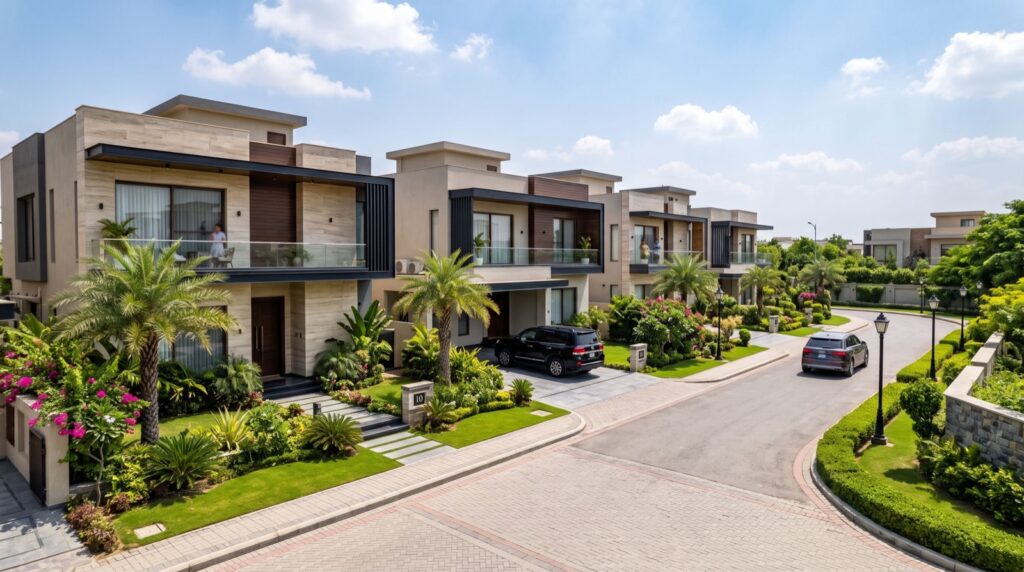
Pay attention to the size mix of surrounding plots too. Areas dominated by larger residential parcels tend to develop into calmer, higher-value neighbourhoods, which is one reason demand for 1 Kanal Residential Plots stays resilient among buyers who want spacious, prestigious surroundings that hold their character over time.
Proximity To Daily Essentials
Convenience sells. A location within easy reach of markets, hospitals, schools, and workplaces commands stronger demand because it fits the rhythm of everyday life. Buyers and future tenants alike weigh how long the commute to work will be, how far the nearest clinic sits, and whether children can reach a good school without an exhausting journey. The closer a plot sits to these anchors, the deeper its pool of interested buyers.
At the same time, there is a balance to strike. Being too close to heavy commercial noise or congestion can dampen residential appeal, while being too far isolates a home from the services families depend on. The sweet spot is a calm residential position that still keeps essentials within a short, comfortable drive.
Verifying What The Map Cannot Show
Some locational risks never appear on a brochure. Low-lying land prone to waterlogging, plots crossed by planned utility corridors, or parcels tangled in ownership disputes can all undermine an otherwise attractive position. This is where physical inspection and honest local inquiry become essential; you must walk the ground, ideally after rain, and speak to people who know the area’s history.
Bringing in reputable service experts to assess drainage, soil, and access before you buy can save you from expensive surprises later. A location that looks perfect on paper but floods every monsoon is not a bargain at any price, and the only way to know is to check before, not after, the money changes hands.
How Location Drives Long-Term Returns
Appreciation is not evenly distributed. Over any given decade, a handful of well-positioned locations capture the lion’s share of price growth while poorly placed plots crawl along or stagnate. When you anchor your purchase to strong connectivity, a growing neighbourhood, and genuine proximity to essentials, you position yourself in the segment of the market most likely to compound. That is how a single disciplined decision at the point of purchase quietly pays dividends for years.
Location also protects you on the downside. When the market cools, buyers become choosier and gravitate toward safe, established positions. A plot in a prime location will still find a buyer in a slow market, whereas a poorly placed parcel may sit unsold. Good location is both your growth engine and your insurance policy.
Key Takeaways
- Location is the one property attribute you can never change, so it deserves the most scrutiny.
- Strong road access and credible connectivity plans lift value more than almost any other factor.
- A growing neighbourhood with families and services signals an upward trajectory.
- Proximity to daily essentials widens your pool of future buyers and tenants.
- Physical inspection reveals drainage, dispute, and utility risks that maps hide.
- Prime locations capture most appreciation and stay sellable even in a slow market.
The Bottom Line
Choosing a plot is really choosing a location, and everything else is secondary. When you slow down, study connectivity, read the neighbourhood’s direction, confirm proximity to the essentials of daily life, and physically verify the ground beneath the paperwork, you replace guesswork with judgment. The twin cities offer plenty of attractively priced land, but price without position is a trap. Put location at the centre of your decision, and you give your investment the strongest possible foundation to grow, endure, and reward the patience you bring to it.